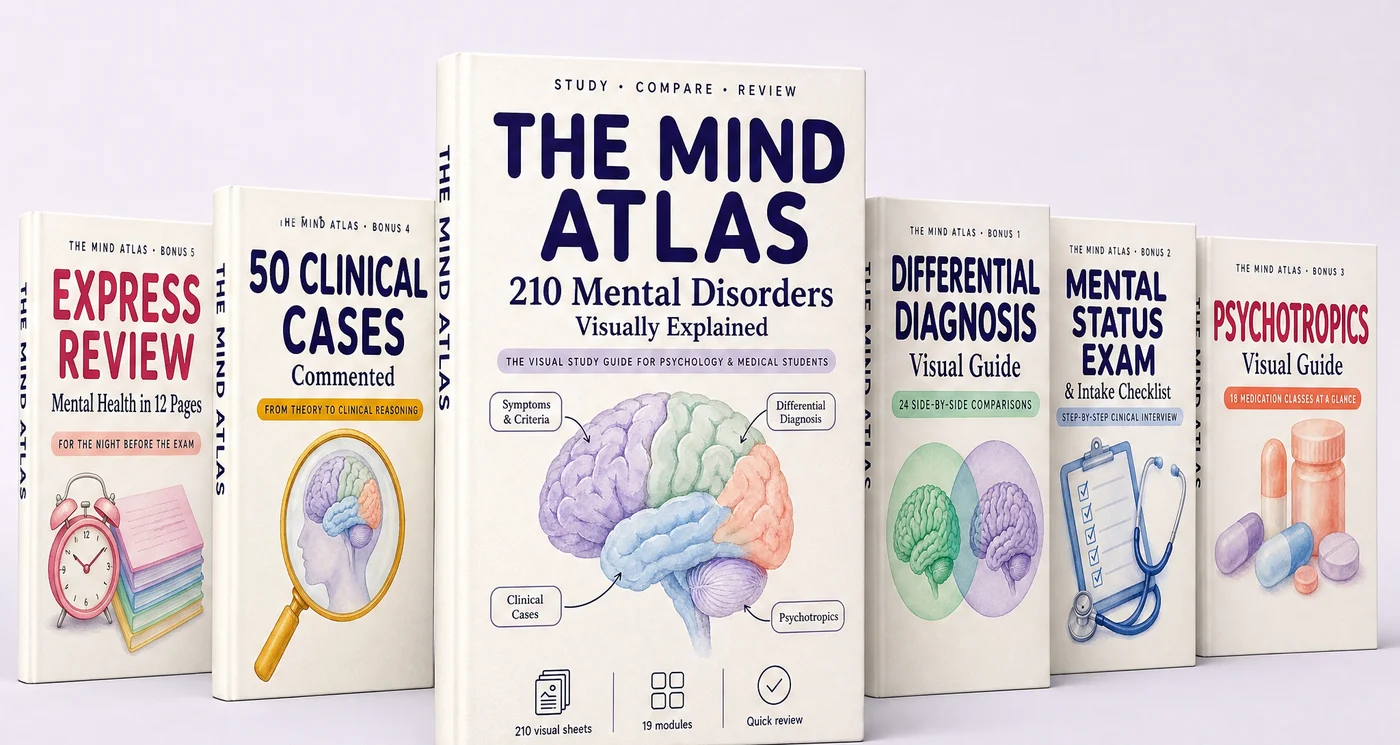
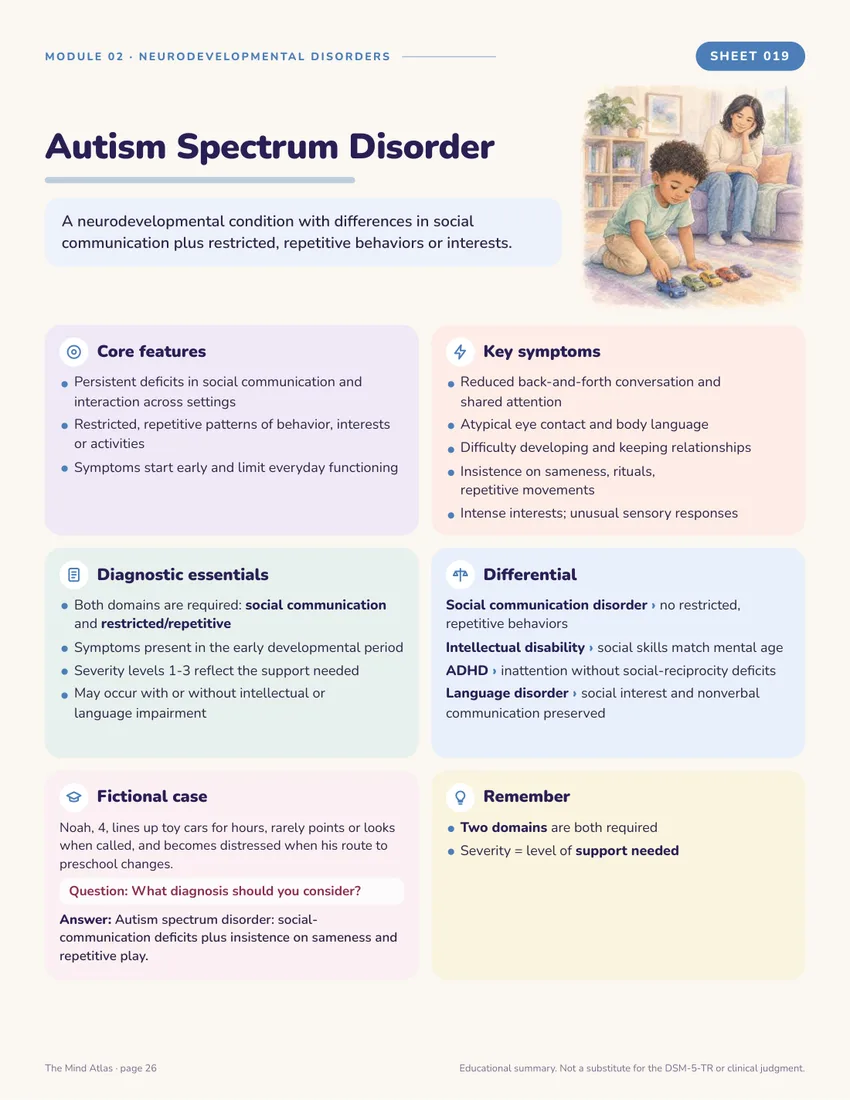
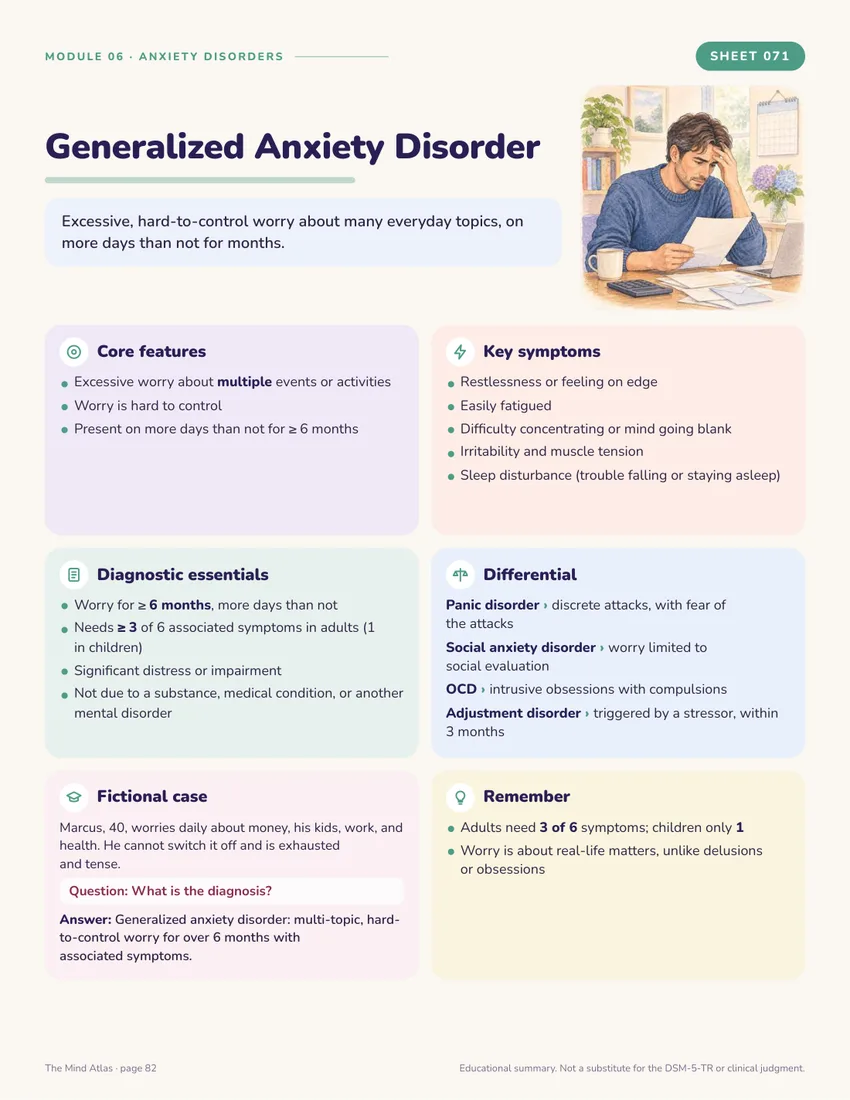
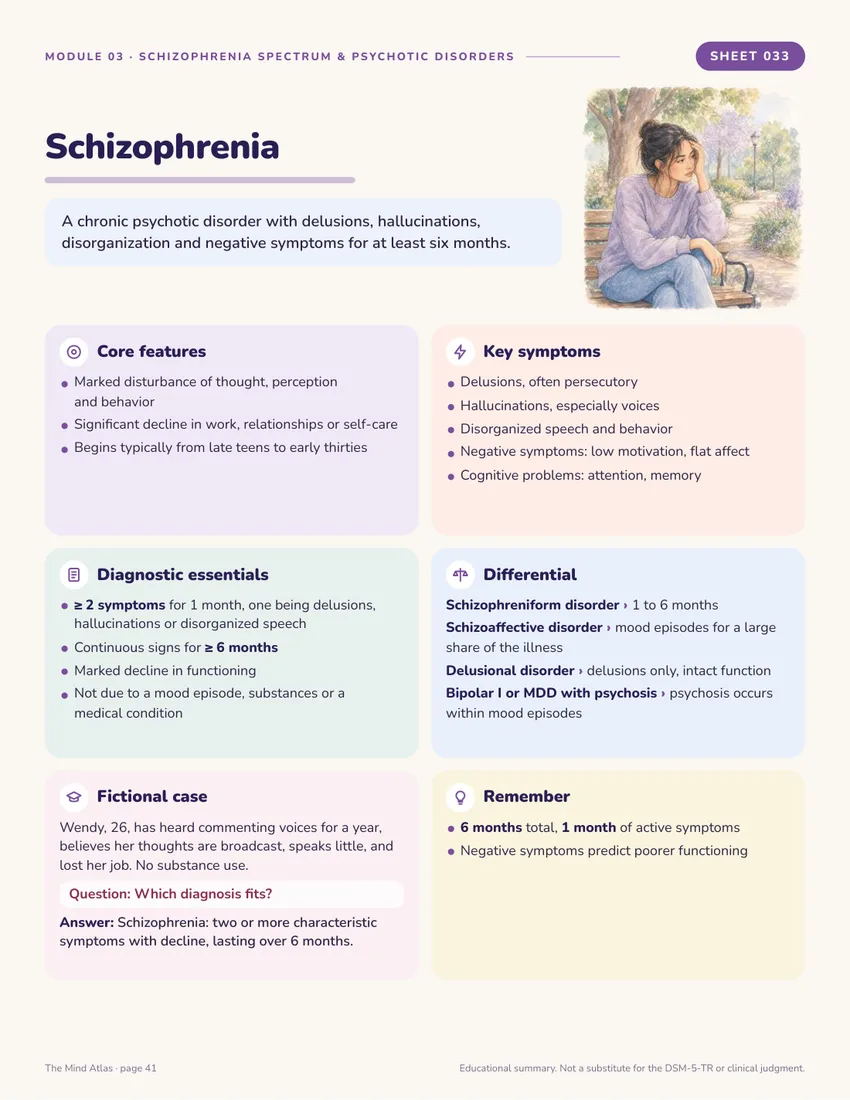
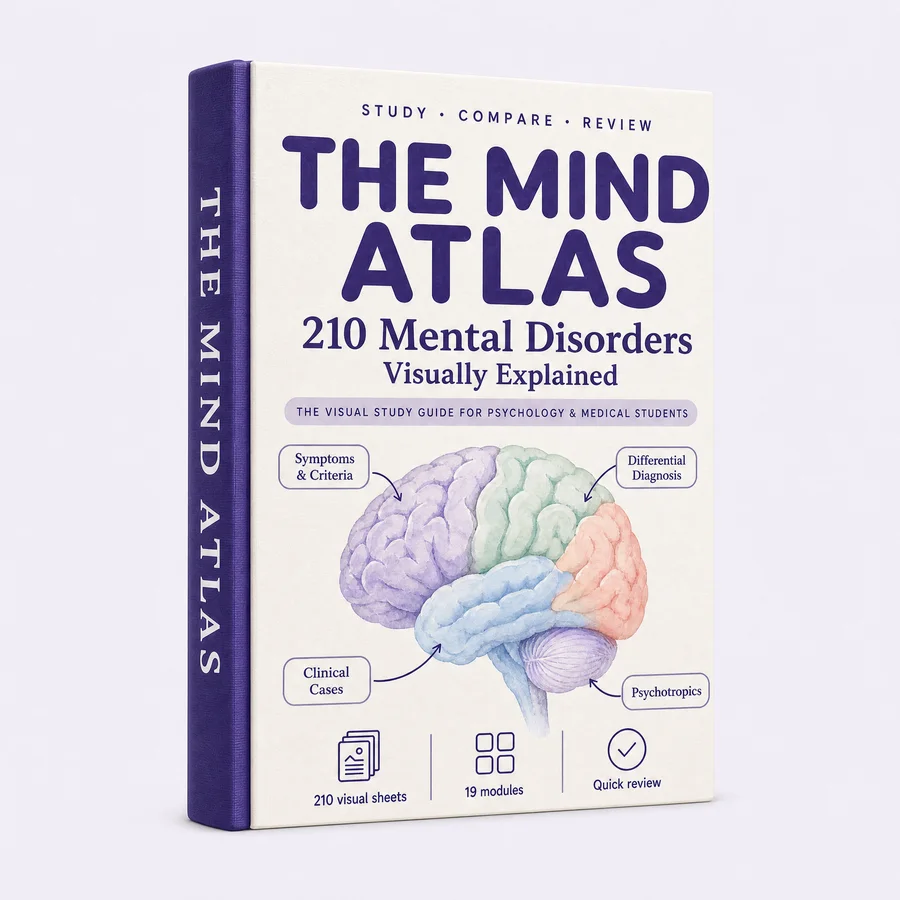
Understand the symptoms, the diagnostic essentials, the differences between disorders and the key concepts, with a clear, structured guide that's easy to review.

It's not a textbook full of long pages of text. It's a visual guide made to help you find the important information fast, compare concepts and organize your review. Every sheet lays out the essentials in a clear, structured way that's easy to look up.


210 visual sheets, organized in one guide.
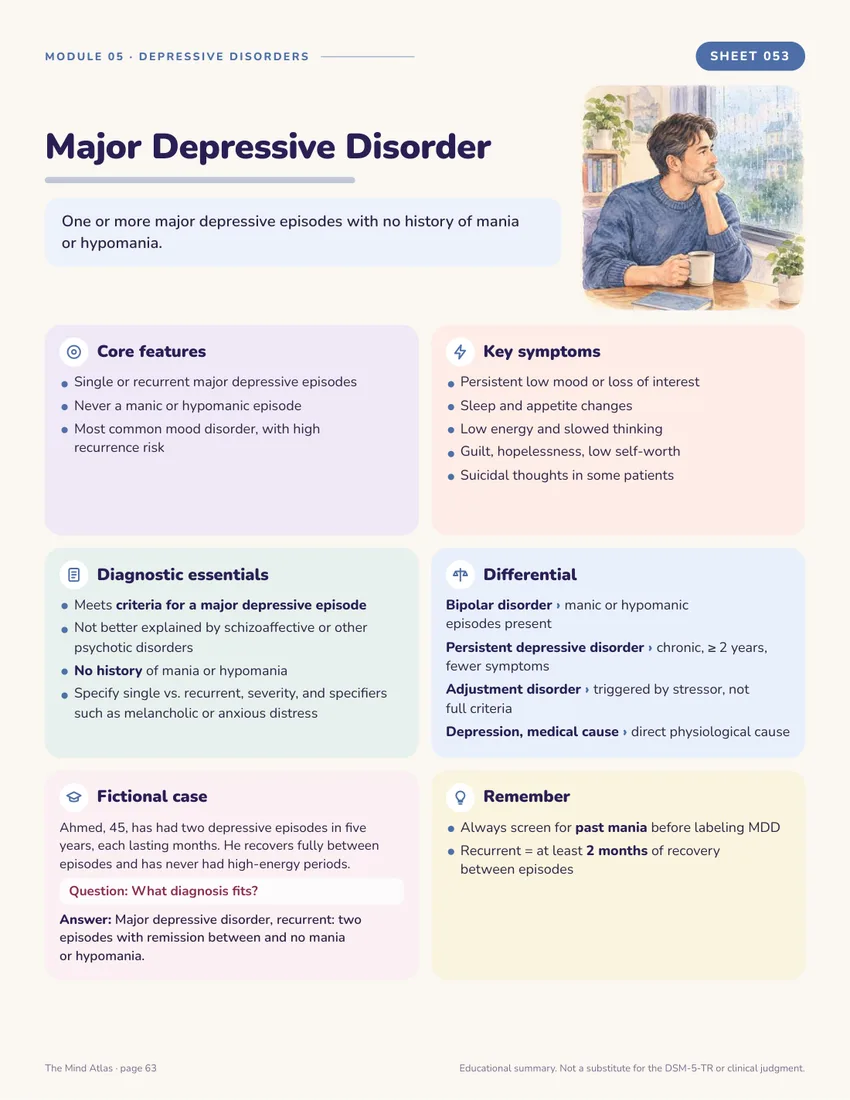
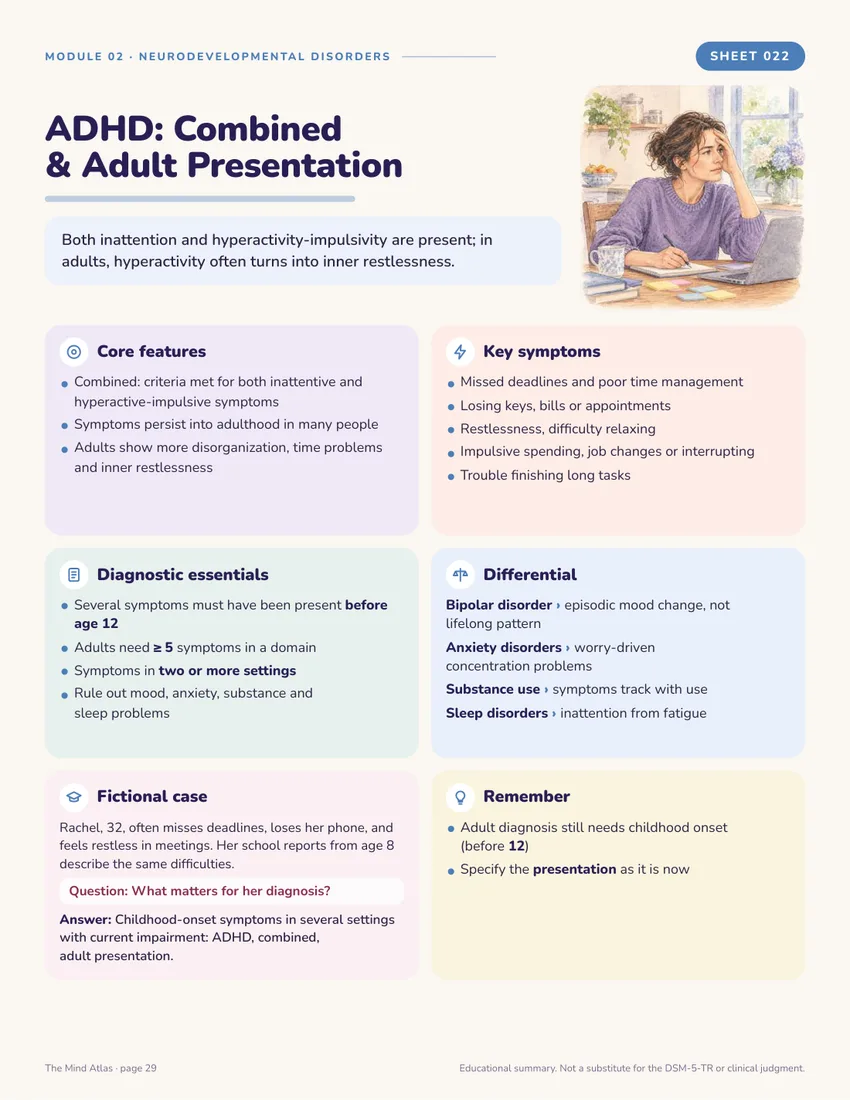
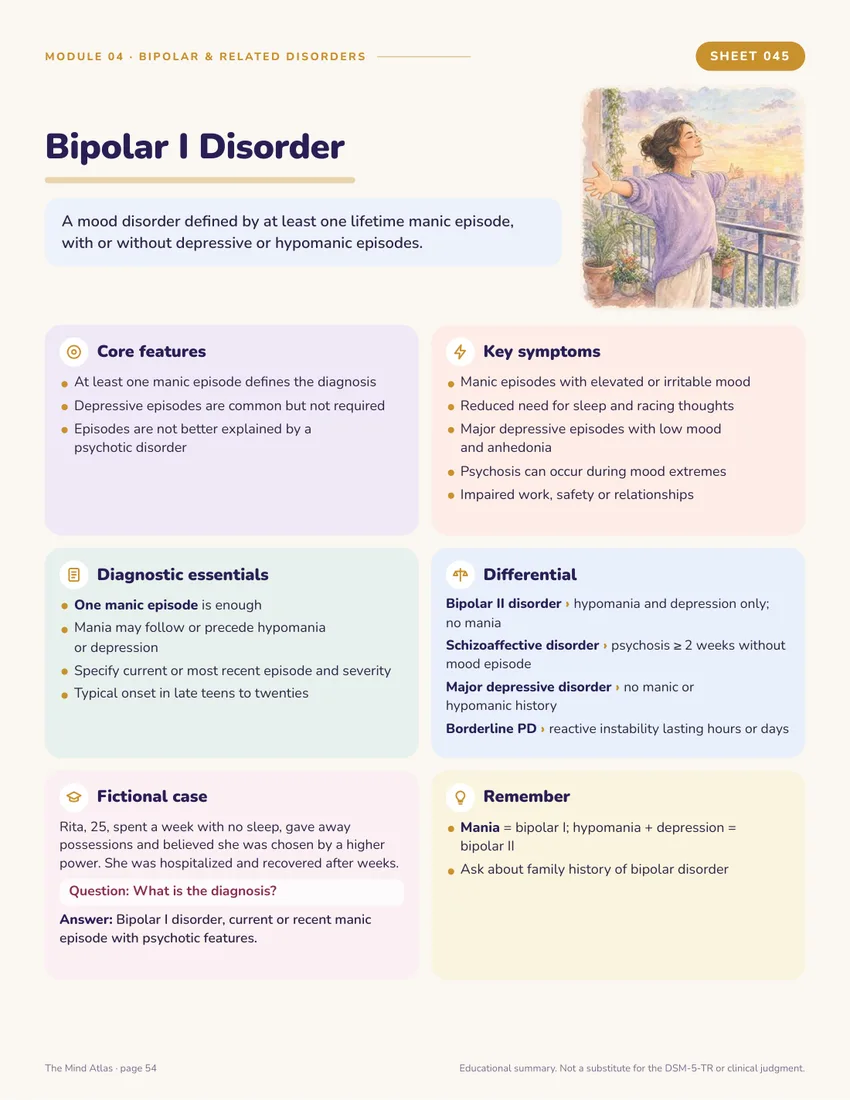
See the full guide →Studying mental health gets confusing when several disorders share symptoms, features or similar concepts. That's why every sheet follows the same structure, so you always know where to look.
What the disorder is, said in a single clear sentence you can remember.
The three or four ideas that define the picture before any detail.
See the signs and manifestations of each clinical picture at a glance.
Duration, thresholds and exclusions, summarized in plain words to study and review.
The disorders and conditions that can look similar, side by side.
The one detail that tells each look-alike apart from the disorder on the sheet.
A short vignette with a question and its answer, so theory turns into reasoning.
The two or three points to review right before an exam, a class or a rotation.
This guide isn't here to give you more text to read. It's here to help you organize what you already have to learn.
See the important differences between disorders that are easy to mix up.
Find the essentials without rereading whole chapters every time.
Turn piles of information into visual sheets that are easier to look up.
Use the comparisons and teaching cases to understand how concepts show up.
No more jumping between lecture notes, screenshots, slides and separate summaries.
Use it on your laptop, tablet or phone, in the library or on the bus.
If mental health is part of your program, this guide can help you organize and review what you're learning.
Use it to review mental disorders, symptoms, diagnostic essentials, core concepts and the differences between the main clinical pictures, from Abnormal Psych to grad school.
Use it as a companion to study and review the essentials of psychiatry, psychopathology and mental health for your courses and your psych rotation.
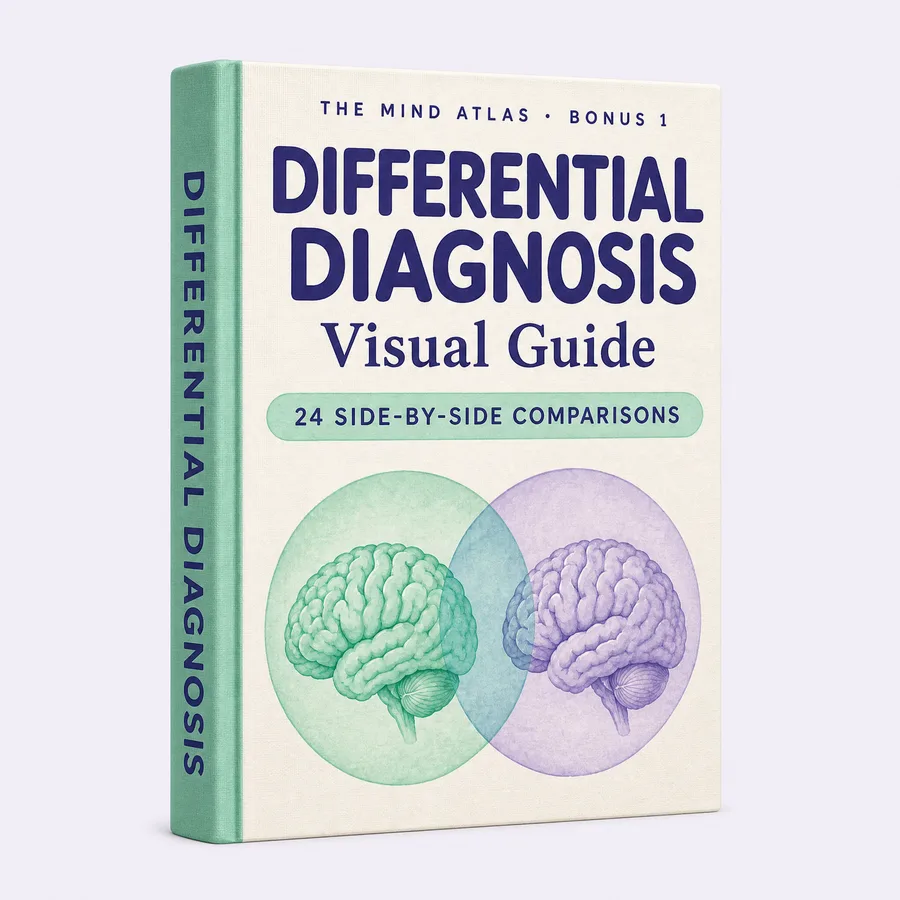
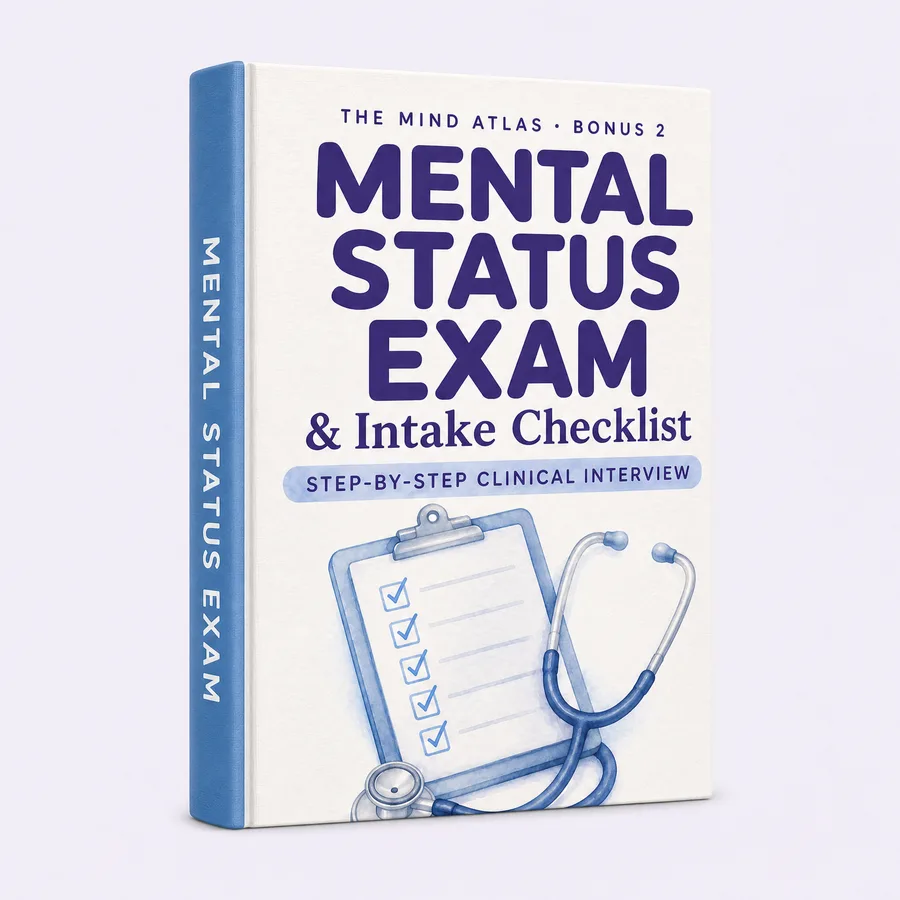
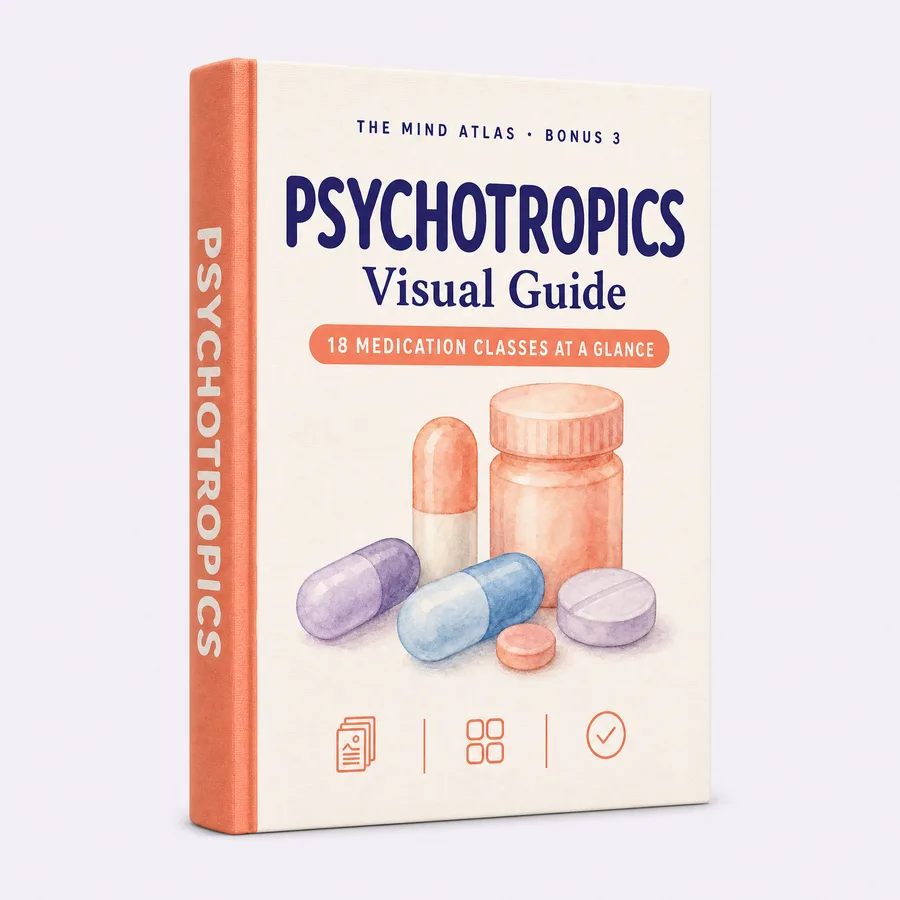
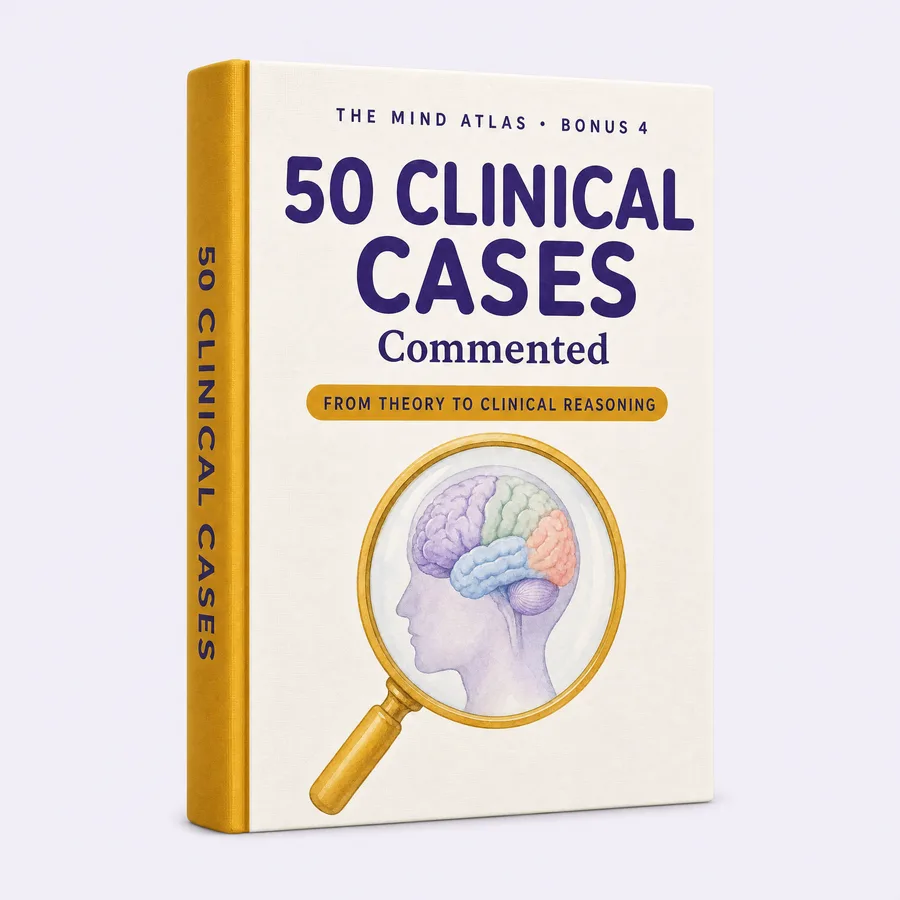
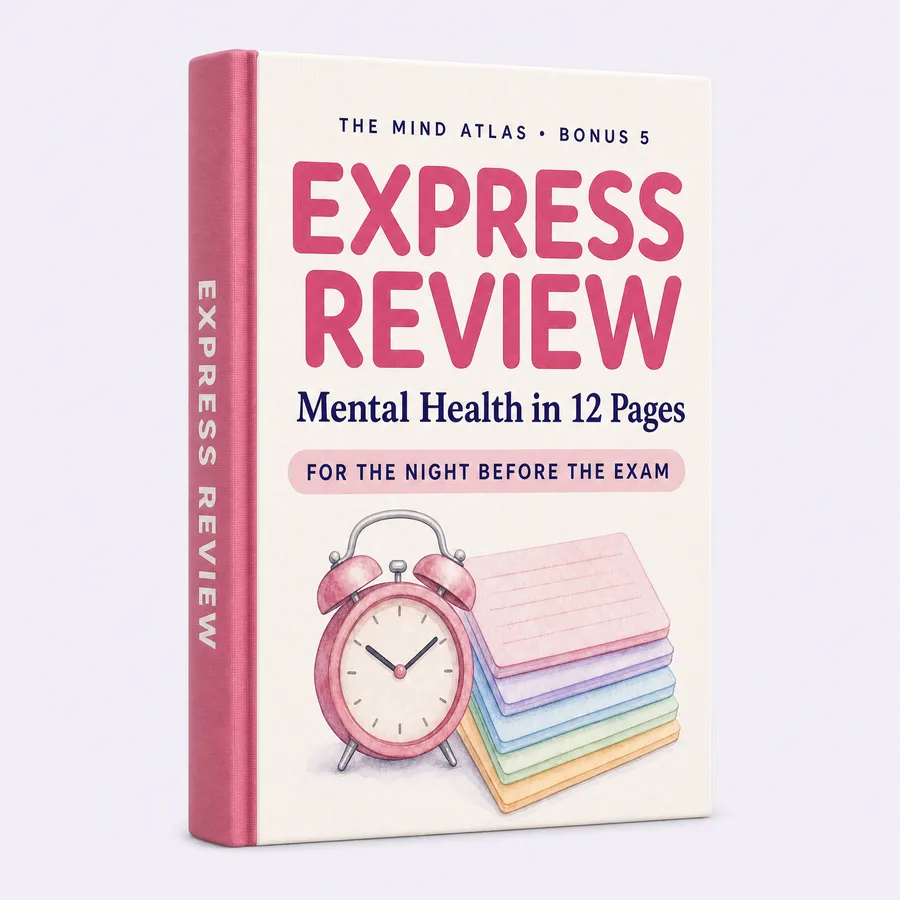
On top of the 210 visual sheets, you get five companion guides to go deeper, compare concepts and organize your review.

24 side-by-side comparisons of disorders and conditions that can look alike, each with the one clue that separates them and the classic exam trap.
Understand the differences between clinical pictures that often get confused.
Valued at $47

A structured, visual guide to the parts of the clinical interview and the mental status exam, with a sample write-up.
Organize the essentials of a mental health assessment.
Valued at $37

A visual academic reference to the 18 main classes of psychotropic medications you study in psychiatry: what they're used for, how they work, side effects and warnings.
Review the main psychotropic classes visually.
Valued at $47

Train your academic reasoning with 50 fictional clinical situations written for teaching.
Connect the theory to teaching cases.
Valued at $67

A condensed 12-page summary of the concepts, differences and essentials for the moments when you're short on time.
Find the essentials to review, fast.
Valued at $27
“Abnormal Psych was the class where every disorder blurred into the next. I had a 40-page Google Doc and still couldn't tell schizophreniform from brief psychotic disorder. I printed the psychosis module and the timeline sheet two weeks before the midterm and reviewed one module a night. On the exam there was a vignette about a guy with symptoms for three months, and I could literally see the timeline in my head.”
“Psych was my last rotation and I had zero time. I kept the differential sheets open on my phone in the workroom. When my attending asked why the patient wasn't bipolar II, I had the answer in ten seconds.”
“I'm a visual learner and the DSM is a wall of text to me. I went through the 50 cases with a friend over a weekend, one of us reading, the other guessing. The personality disorders finally stopped feeling like a list of adjectives.”
“I went back to school at 34 for my master's in counseling and felt behind everyone. The one-line definition at the top of each sheet was my lifesaver. Now I make my classmates' study guides from it, and the psychotropics bonus made the pharm lecture make sense.”
Inspired by what psychology and medical students share online. Results vary.
The complete guide and the five companion guides, together in one digital offer.
All 210 visual sheets and every companion guide, in one access.
Total value: $297
TODAY, ONLY
$27
One-time payment · No subscription
Yes, give me the guide · $27 →Instant digital access after payment.
Once you have access, take your time to explore the guide and see if it fits the way you study. If you want a refund within 7 days of your purchase, just write to us and we'll take care of it, as explained in our refund policy.
This commercial guarantee is in addition to your legal consumer rights and doesn't replace them.Right after your payment is confirmed you'll get access to your online library. You open it with the email you used to buy, no password to remember.
It's 100% digital. Nothing is shipped: you read it online or download the PDFs.
Yes. Your library works on your phone, tablet and laptop, and every guide can be downloaded as a PDF.
Yes. Each sheet is one US Letter page, so you can print the modules you're studying and write on them.
Your access doesn't expire. Anything we add later shows up in the same library.
Yes. It follows the order of the DSM-5-TR chapters, so it lines up with Abnormal Psychology, Psychopathology and grad-level diagnosis courses.
Yes. It's a visual companion to review the essentials of psychiatry for your courses and your psych rotation.
No. Every sheet starts with a one-line definition, and Module 1 covers the basics of clinical reasoning and the mental status exam.
No. It's an educational summary that helps you organize and review. It doesn't replace your courses, your textbooks, the DSM-5-TR or clinical judgment.
You have 7 days from your purchase. If it's not for you, write to ask@digitalmaterials.store and we'll refund you.
Credit and debit cards and the digital wallets shown at checkout. It's a one-time payment, with no subscription.
Organize the symptoms, the diagnostic essentials, the differences and the key concepts with a visual guide made for psychology and medical students.
$27
One-time payment · No subscription
Get the 210 sheets →